

NVC Resources on Needs
-

Clarifying Our Requests to Meet Our Needs
Trainer Tip We know that when people learn to communicate effectively with each other, their lives and their relationships can be truly transformed. —Dr. Thomas Gordon Consider these common complaints: “My husband never listens to me.” “My wife is always talking about her feelings, and then she wants me to talk about my feelings too!” We understand the frustration behind statements like these,...
-

The Cause of Our Feelings
Ask the Trainer Dear Trainer, I would love some clarity about the NVC perspective on the cause of our feelings. I am quite clear that nothing external to me is the cause of my feelings, and it seems also quite clear that my thoughts (beliefs and perceptions) are the cause of my feelings. Yet in NVC the cause is said to be our unmet needs. Yet again I have also heard NVC trainers say that we...
-

Naming the Feeling and Need
When you experience an emotion, your body send a message to your brain that lights up the amygdala. Then what? Listen as Sarah Peyton demonstrates the NVC practice of Naming the Feeling and Need, which calms the amygdala and enables you to move into relational space. Keywords: Sarah Peyton NVC basics feelings brain science needs universal human needs emotions
-

Five Core Principles of Living Compassion
Listen to Robert describe the five core principles of Living Compassion and the relationship of needs to spirituality. Great material for reflection and reference! This talk is from Robert's course, Life Force and the Spirituality of Human Needs. {attachment:all} Keywords: beauty of the needs consciousness needs presence compassion connection healing inspiration self compassion values...
-

NVC as a Strategy
Trainer Tip I care not so much what I am in the opinion of others as what I am in my own; I would be rich of myself, and not by borrowing. —Michel Eyquem de Montaigne Human needs are universal and strategies are specific. Well, Compassionate Communication is a process, but also a strategy. The needs I try to meet by living and teaching this process are harmony, peace, fun, love, safety, joy,...
-

Enemy Images Process and Exercise
Ask the Trainer Dear Trainer, What guidance do you have for working with enemy images? Can you say some things about processes and/or exercises that can bring relief from this trap? Namaste, —K.M., California, USA Trainer Answer and Practice Exercise The first step is to recognize when enemy images are present in our minds. Often I find that these images operate at a semi-conscious level,...
-

Colloquial NVC Options
How can we express ourselves in a way that supports a natural flow of connection while maintaining a focus on NVC consciousness? This handout from CNVC Certified Trainer, Miki Kashtan, offers seven options that support NVC enthusiasts in evolving from classical to colloquial NVC language. KEYS: Fluency in our use of NVC rests on the foundation of connecting with compassion for self and other,...
-

Marshall Rosenberg's Vision of Social Change
In this moving reflection, Rachelle Lamb honors Marshall Rosenberg’s true vision for Nonviolent Communication—not just as a tool for personal transformation, but as a catalyst for deep social change. She reminds us that inner work alone is not enough in a world facing ecological collapse, rising suicide rates, and widespread displacement. Quoting Rosenberg, she calls on us to remember that our...
-

Persisting vs. Demanding
Trainer Tip The art of love . . . is largely the art of persistence. —Albert Ellis Persisting is the active attempt to meet our needs by continuing to connect with another. Demanding is the insistence that someone do something to avoid negative repercussions. Let’s imagine that you want to go on vacation with a friend. She says she doesn’t have enough money. A demand would sound something like...
-
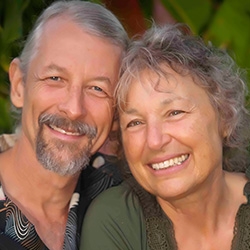
Self-Empathy
Watch this video with Jim Manske to explore the practice of Self-Empathy through a different lens. Included is a unique four-step Self-Empathy process that culminates in a focus of gratitude. The four-step process of Self-Empathy as seen by Jim Manske is: Recognizing that you need Self-Empathy (tuning into physical sensations, emotions and self-talk). Self-acceptance (looking at what upsets you...
Quick Links

Stay in Touch!
We value your privacy, won't share your email address and you can easily unsubscribe any time.
