

NVC Resources on Dialogue
-

Distinguishing Life-Serving Boundaries From Requests
For effective dialogue clarify your needs, boundaries, and requests beforehand. Setting boundaries is telling someone what you're going to do in order to meet or protect needs for yourself or others. Whereas with requests, even if you have preferences, you still hold open curiosity about strategies to collaborate with others in meeting needs. Read on for more. See this article Keywords:...
-

An NVC Perspective of Power Relations and Connection
class, gender and other social divisions Connect with yourself as you understand your own life experience in relation to power, resources and choice Develop capacity for showing up fully for dialogues across social divisions In Parts 1 and 2, Inbal and Roxy will introduce an NVC perspective on power, resources and choice. This is the conceptual foundation for their work across challenging social...
-

How to Interrupt
inside, then abruptly say, "Sorry, I just remembered that my house is on fire – I have go right away!"? 4. Honesty or Empathy: There are the two basic choices we have whenever we are engaged in a dialogue with another – expressing honestly what is happening for us or empathically connecting with what is alive in the speaker. Either one can help to create connection. After claiming the floor from...
-

Experience More Joy and Success at Work
or detract from business? Key tips for bringing NVC into the workplace. Lessons learned about what works and what doesn’t. Keywords: consciousness empathy needs presence strategies connection dialogue inspiration intention listening values social change workplace empowerment Dian Killian Gregg Kendrick Martha Lasley Mel Sears, Wes Taylor Mary Mackenzie
-

Compassionate Communication and Empathy's Awakening
John Cunningham provides support to deepen your understanding and practice of NVC, including a sketch of the participatory and onlooker modes of consciousness, lists of feelings, needs and sample dialogues. It includes an overview of Marshall Rosenberg’s Nonviolent Communication, a sketch of the participatory and onlooker modes of consciousness, lists of feelings and needs and sample dialogues....
-

Teachers Expressing to Students and Colleagues
from each other to hold the vision, maintain hope in being able to manifest it, and being able to stay connected with your colleagues who do not share your vision. Here’s an example of a possible dialogue you might have with your colleagues: Colleague: I feel guilty; I shouldn’t really be such a “softie”. You: I get a sense that you are really torn about your approach to the kids, that you want...
-

Key Assumptions and Intentions of NVC
use of force: We aim to use the minimum force necessary in order to protect, not to educate, punish, or get what we want without the other’s agreement, and only in situations where we find that dialogue fails to meet an immediate need for physical safety. We aim to return to dialogue as soon as we have re-established a sense of physical safety. Keywords: empathy expression feelings honesty needs...
-

A Deep Dive into the Art of Mediation
– this is the basic rhythm of a mediation The practice of 'Interruption that Brings Connection' How to deepen your empathic skills – empathy as the bread and butter of mediation How to support a dialogue to go beyond ‘NO’ and differences in opinion The content in the recordings from this course will demonstrate the intention, art, and craft of mediation, including mediation structure, how to...
-

Connecting Requests
In this insightful snippet from Sarah Peyton, discover how connecting requests can transform conversations into meaningful exchanges. Referred to as the "steering wheel" of NVC dialogue, connecting requests shift the focus from action to connection, creating clarity and understanding. Learn how to express yourself, ensure you’re understood, and check in with others without falling into the trap...
-
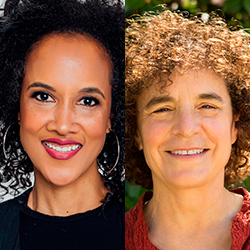
Responding to Everyday Racism Role Plays
approaches to navigating difficult conversations. Throughout the demonstration, they underscore the significance of cultivating self-empathy and mindfulness to effectively engage in challenging dialogues. Specifically, they introduce a role-play scenario concerning affirmative action, aimed at illustrating the contrasting outcomes when utilizing or not utilizing nonviolent communication skills....
Quick Links

Stay in Touch!
We value your privacy, won't share your email address and you can easily unsubscribe any time.
