

NVC Resources on Feelings
-

Owning Your Own Experience
Listen to Jim and Jori Manske share how we are conditioned to disconnect from our own feelings and how we can unlearn this habit to experience more full and rich inner lives. Practices for owning your own experience 1. Set aside about 10 minutes per day to journal, using this template, in order to support “owning your own emotional experience.” Begin with an intention to be gentle with yourself...
-

Tools to Support Relational Attunement
Yvette Erasmus shares Terry Real's grid as a tool for exploring a spectrum of emotional responses. We all have feelings and sometimes we get dysregulated or frozen up. How do you want to express and be in connection with other people? Can you attune to the relational context that you are in? Keywords: emotional regulation self regulation boundaries Yvette Erasmus
-

Tips for the Road Series Tip 24
How do you know when you’re projecting disowned parts or replaying old relationship dynamics? It’s hard to know for sure, but if you find yourself upset or shutting down and unable to have a dialogue in which you can speak clearly about your feelings and needs and empathize with the other’s feelings and needs, there is likely a projection. The stronger your reaction, the more likely you are...
-

When Someone's Anger Stimulates Fear for My Physical Safety
CNVC Certified Trainer Arnina Kashtan tells us to look to our inner dialogue and the other's needs when we're feeling fear of physical violence that's been stimlated by someone's anger. {attachment:all} Keywords: demands feelings honesty presence strategies personal growth relationships honest expression authenticity vulnerability fear NVC in relationships self acceptance emotional safety...
-

Going Beyond Fear
We all have experienced fear in our lives. For some of us it has had crippling effects. Before dealing with fear it is important to distinguish between fear being defined as a thought or a feeling. In order to deal with fear and uncover what is behind it, it is essential to define it as a feeling. Franklin D. Roosevelt was in touch with how easy it is to create in our mind "thoughts of fear"...
-
How To Deal With Difficult People
Sometimes it may be difficult to talk to someone who is criticizing, judging, or blaming you. It may be just as difficult to deal with someone who is giving you the silent treatment, giving you the cold shoulder or just plain throwing a tantrum. So, here are some tips on how to deal with those difficult people who have a hard time communicating what they want to say in a loving and kind way....
-

How to Open Your Holiday Presence
Though the holidays are supposed to be a time of connection and celebration, emotional pain and suffering may arise, even in the midst of the festivities. Before painful situations arrive, you can build resources that will enable you to bounce back more quickly. You can have more balance, perspective and choice by training yourself to include attention on needs that are satisfied and by deeply...
-

Developing Compassion for Humans, Animals and All Life
Access this complete 4 session course Around the world, people are experiencing a new paradigm that holds all species (humans, animals, insects, etc.) as equal and mutually interdependent. Take this fascinating webinar with LoraKim Joyner and investigate how merging science; the social and emotional intelligence of humans, animals and other species; and Nonviolent Communication can bring a...
-

How to Interrupt
Ask the Trainer Dear Trainer, I feel a lot of fear or nervousness about approaching a neighbor who uses "wastebasket talk." Once she's engaged, there are only two techniques that interrupt the flow: either leaving or interrupting. I would like to approach her and tell her that when she starts talking, and never stops to check in with me (the listener), it doesn't meet my need for sharing or...
-
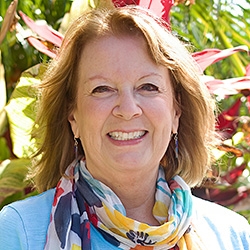
When We Need Empathy the Most
Trainer Tip She was so bankrupt, she couldn’t even afford a negative thought. —Sheryl Jai Is your emotional bank account low, or maybe even empty? I try to keep my emotional bank account balanced. That is, I try not to give more than I receive, because if I’m bankrupt, I have little to give anyone, and I am more likely to say and do things I regret. This doesn’t mean a quid pro quo in...
Quick Links

Stay in Touch!
We value your privacy, won't share your email address and you can easily unsubscribe any time.
