

NVC Resources on Love
-

A Hunger For Appreciation
Trainer Tip We are here to help each other through life, this is why we are in partnership. —Hugh Prather Despite our difficulty in receiving appreciation, or maybe partially because of it, many of us long for it. This is a quandary because many of us have not found a comfortable way to ask that our need for appreciation be met, so our longing becomes even more pronounced. If you are in this...
-

Observation, Feelings, Needs, and Requests (OFNR) Communication Components
Observation vs. Evaluation/Judgment Observation is awareness of what we perceive with our senses – sight, sound, touch, taste, smell — and also of our thoughts (images, words, concepts, evaluations). In language, we can describe purely what we are observing (i.e. words we hear, actions we see from our subjective frame of reference) separate from words that evaluate (e.g. liking or disliking,...
-

The Relief of Authenticity
Trainer Tip The most exhausting thing in life is being insincere. —Anne Morrow Lindbergh Sometimes I hear people say that they don’t have the energy to be authentic, and that it is easier to ignore their truth to keep the peace. I understand this sentiment because I lived this way for many years. I thought it took less energy to censor myself, to go along with what other people wanted, and even...
-

The Spirituality of Nonviolent Communication
Access this complete 6 session course Discover how the perennial strength of compassion and the living energy of needs can help you develop resilience in order to remain present with yourself and others amidst today's challenges. Fully empower your place and engagement in life, cultivate and strengthen your center. The center is where your values lie, your heart center, and the center of your...
-

How Anger Can Help or Hinder
We can use anger as an important signal to let us know that we perceive a threat to a universal need or value, directing our attention to something so that we can take effective action, and avoid harmful thought patterns. For example, instead of dwelling on a "should," focus on addressing unmet needs through boundaries and effective communication. Anger is an important signaling system letting...
-

Getting Beyond Our Self-Defeating Behaviors
Trainer Tip There is no way to peace; peace is the way. —A.J. Muste Have you ever noticed yourself doing something that shakes the serenity of your colleagues, your family, or yourself? We have become so used to conflict that we hardly know how to handle some situations without it. Not long ago, I participated in a committee of Nonviolent Communication trainers. I was starting to tell myself...
-

It's Not Just Me
Access this complete 3 session course Ever since the Women's Movement of the 60s and 70s, we have known that "the personal is the political" – that individual suffering and challenges often have their source in the social systems within which we live. How can we mobilize this insight in support of our own and others' healing? Join Miki Kashtan for this course designed to shed light on how the...
-

Living the Self-in-Life
Access this complete 6 session course Come. Let us journey together into our own authentic Life force: the essential living energy that permeates all of our lives. Your journey will begin at the center: with the divine / life force, or soul force. Robert Gonzales shares how this fundamental life energy is the tender expression of your inner being, or soul. It unfolds through the heart as your...
-
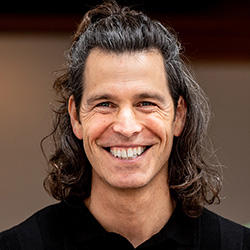
The True Role of a Mediator
Yoram Mosenzon shares that the role of a mediator is often misconceived as solving conflicts, which can create stress and exacerbate the conflict. Instead, the true essence of mediation is about remaining untriggered, understanding the pain of the conflicting parties, and facilitating communication. Conflict is defined as two people experiencing pain simultaneously. The mediator's job is not to...
-

Sexual Expression
In Mindful Compassionate Dialogue, discerning the difference between a universal need and a strategy to meet that need can mean the difference between staying stuck or getting unstuck in a conflict. Let's look at a simple example. If you believe your need for peace is the same as time alone, you can only meet your need for peace if you get alone time. Getting regular alone time is a popular...
Quick Links

Stay in Touch!
We value your privacy, won't share your email address and you can easily unsubscribe any time.
